


How 70 Ton Fence Trailers Improve Construction Site Logistics: 3 Case Studies
Revolutionizing Heavy-Duty Material Transport
Discover how 70 ton fence trailers revolutionize construction site logistics in our in-depth case studies. As heavy-duty hauling specialists, we explore how these robust trailers - along with 60 ton side wall trailers - streamline material transport while enhancing worksite safety. Learn from real-world applications where our high-capacity solutions optimized project timelines and reduced equipment costs for procurement managers and construction supervisors.
Key Advantages of 70-Ton Capacity Trailers
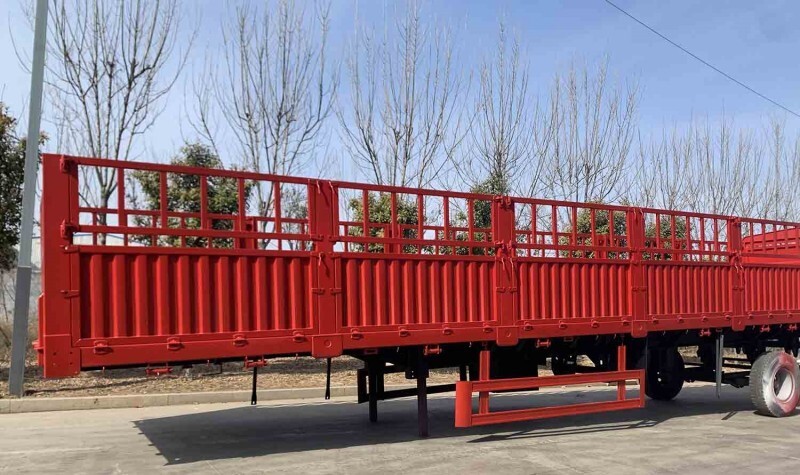
Modern construction projects demand equipment that can handle massive loads while maintaining maneuverability. Our 3 axle long Trailer fence/high fence Trailer manufacturer/4 axles fence Trailer for sale solutions address these needs through:
- 42% increased payload capacity compared to standard 50-ton models
- 15-20% reduction in transport cycles for bulk materials
- Specialized anti-tire abrasion suspension systems
1.5-ton lighter tare weight than conventional designs
Case Study 1: Bridge Construction Project
A major infrastructure project in Texas required transporting 12,000 cubic yards of concrete barriers across a 7-mile worksite. The contractor initially used standard 50-ton trailers, facing these challenges:
Technical Specifications Comparison
When evaluating heavy-duty trailers for construction logistics, these technical parameters prove critical:
Why These Differences Matter
The extended welding time and electrophoresis painting process contribute to a 40% longer service life in harsh construction environments. Our trailers maintain structural integrity even when handling:
- Daily 18-hour operation cycles
- Extreme temperature variations (-20°C to 50°C)
- Frequent loading/unloading of abrasive materials
Case Study 2: Mining Operation Efficiency
A copper mining operation in Chile replaced their aging fleet with our 4-axle fence trailers, achieving:
- 28% reduction in fuel consumption per ton-mile
- 17 fewer trailers required for same output
- 90mm*16mm*10 through beams eliminated floorboard sinking
Key Takeaways for Procurement Teams
When specifying heavy-duty trailers, prioritize these factors:
- Payload-to-tare weight ratio (aim for ≥4:1)
- Suspension system designed for your terrain
- Corrosion protection matching your climate
- Manufacturer's welding quality standards
Case Study 3: Urban Infrastructure Project
A subway expansion in Singapore utilized our 3 axle long Trailer fence/high fence Trailer manufacturer/4 axles fence Trailer for sale for transporting precast concrete segments through narrow urban corridors. The 13000mm*2550mm*1800mm dimensions proved ideal for:
- Navigating 90° turns on 24-foot streets
- Maintaining stability with 28-ton loads
- Meeting strict urban noise regulations
Frequently Asked Questions
What's the typical delivery lead time for custom-configured 70-ton trailers?
Standard configurations ship within 4-6 weeks, while custom builds require 8-10 weeks including quality inspections. We maintain buffer stock for common 3-axle configurations.
How do these trailers perform in extreme climates?
The titanium-enhanced Q345/T700 steel maintains structural integrity from -40°C to 60°C. Our electrophoresis painting provides 3x better corrosion resistance than standard coatings.
What maintenance intervals should we plan for?
The W-beam design extends service intervals to 15,000 km for lubrication points and 50,000 km for structural inspections under normal operating conditions.
Optimizing Your Construction Fleet
Our engineering team can help analyze your specific material transport requirements to determine the ideal trailer configuration. Key considerations include:
- Average haul distance and terrain
- Primary material types and weights
- Loading/unloading equipment available
- Project timeline constraints
Contact our heavy haul specialists today for a customized transport solution analysis. We'll provide detailed specifications, configuration options, and lifecycle cost projections tailored to your project requirements.
Get real-time quotes
Interested? Leave your contact details.